
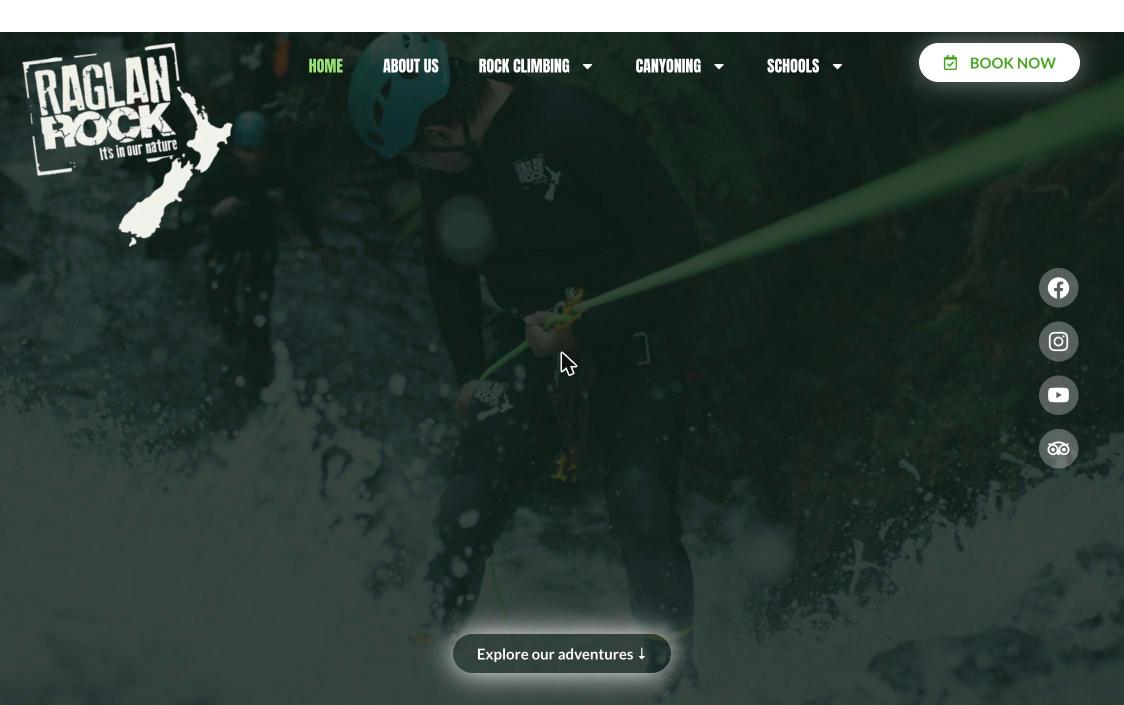
Raglan Rock runs rock climbing, caving and canyoning adventures around Raglan. Their customers book on their phones, often while already travelling, so we did a full website rebuild focused on speed, display, SEO and AI search.
- Rebuilt from the ground up on Elementor, replacing an old, feature-heavy theme
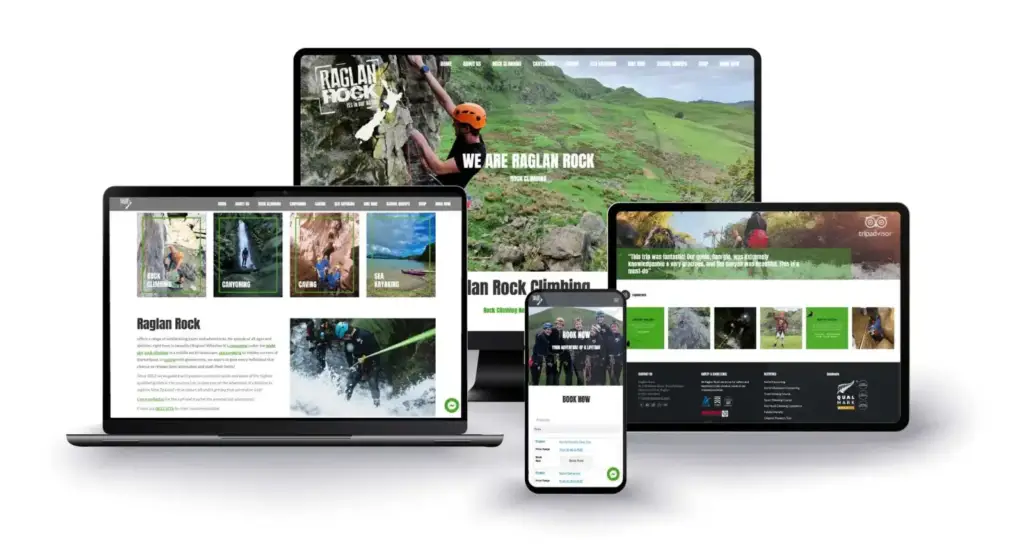
- A fraction of the previous load time, with a clean layout on every screen size
- PageSpeed Insights desktop: 95 performance, 94 accessibility, 100 best practices, 92 SEO and Agentic Browsing 3/3
- Written and structured for GEO (AI search) as well as traditional SEO
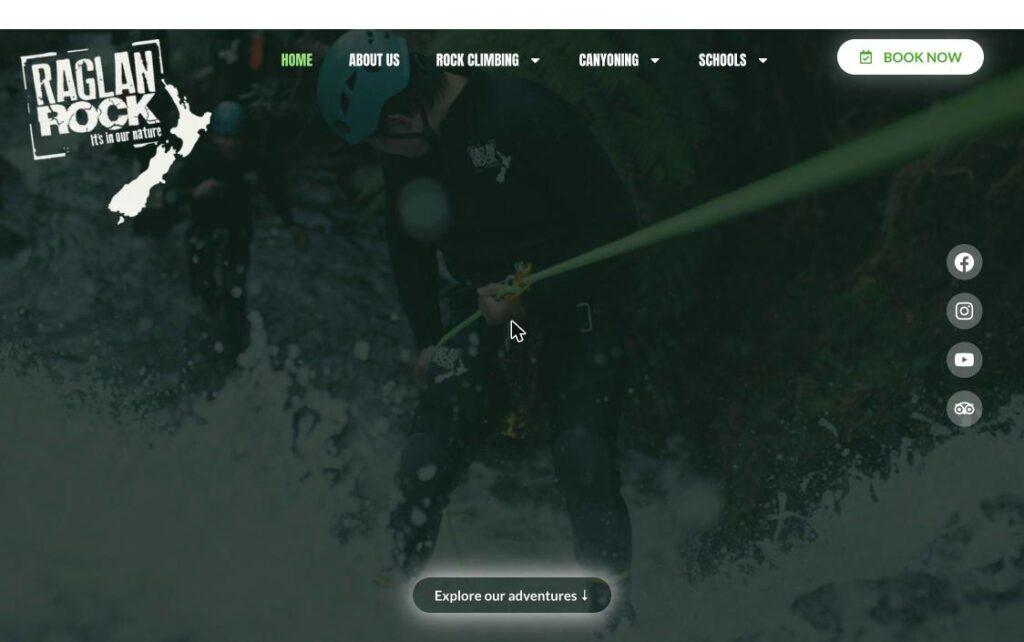
The result: a fraction of the load time
The new site loads in a fraction of the time the old one did. Here’s what Google PageSpeed Insights reports for the new home page:
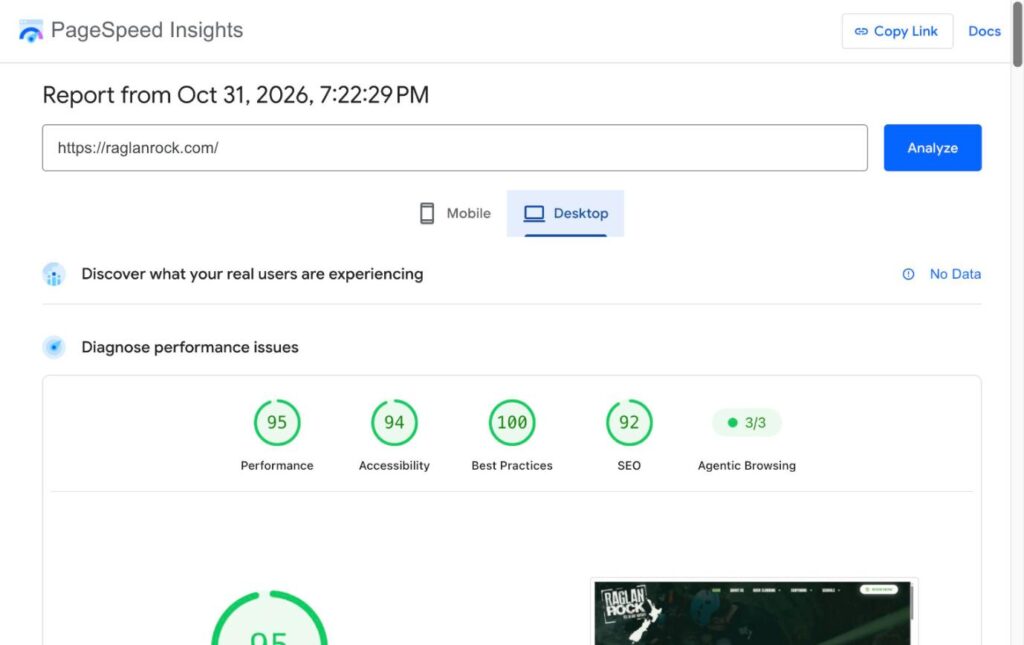
On mobile, performance scores in the high 80s.
Why the scores matter: PageSpeed scores aren’t the goal on their own. They’re a useful proxy for what customers feel: pages that appear quickly, don’t jump around while loading, and work properly on a phone. Those are the things that keep someone on the page long enough to book.
About Raglan Rock
Raglan Rock’s adventures include the Real Rock Climbing Experience, sport and trad climbing courses, Karioi canyoning, glowworm canyoning, school groups and a school holiday programme. It’s a visual, outdoor business, and the website has to sell that feeling quickly on a small screen.
What was wrong with the old site
The previous site sat on a feature-heavy theme. Like a lot of off-the-shelf themes, it loaded far more code, fonts and scripts than any single page needed. That made pages slow to appear, especially on mobile data, and made the layout harder to keep tidy across screen sizes.
It also made the content harder for search engines to read. When headings, tour details and booking links are buried in layout code, Google and AI assistants have to work harder to work out what a business actually offers.
What we changed in the rebuild
A clean Elementor build
Every page was rebuilt with only the elements it needs, so there’s far less code to download before something useful appears.
Better display on every screen
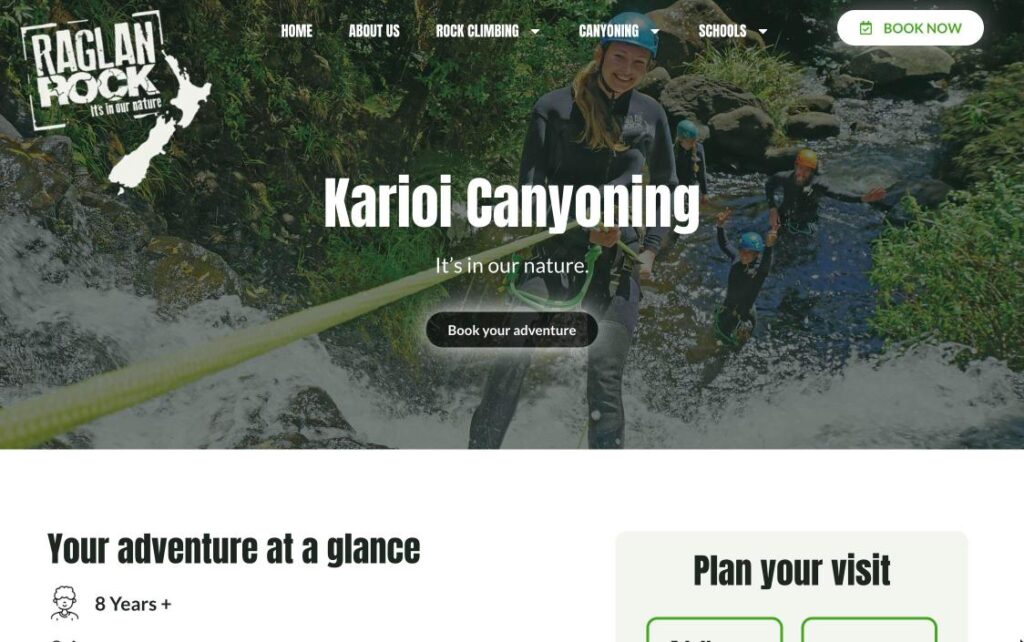
Full-width adventure imagery, a clear menu by activity (rock climbing, canyoning and schools) and a Book now button that’s always in reach.
Clear structure for SEO
One descriptive main heading per page, a proper page hierarchy, descriptive titles and meta descriptions, and structured data that tells search engines what each page is.
Written for GEO
Plain, specific descriptions of each tour, where it runs and who it suits make Raglan Rock easier for ChatGPT and Google’s AI Overviews to recommend.
Bookings kept simple
The site still connects to Raglan Rock’s existing tourism booking system, so the team didn’t have to change how they take bookings.
SEO and GEO: being understood, not just found
Generative engine optimisation (GEO) is about being understood by AI tools as well as ranked by Google. For Raglan Rock that meant naming each activity clearly, saying where it runs (Karioi, Raglan, Waikato), who it suits and how to book, in plain language on its own page.
We also added an llms.txt file: a plain-language summary of Raglan Rock’s adventures, location, contact details and key pages, written for AI agents. That’s what takes the site to a full 3/3 for Agentic Browsing in PageSpeed Insights.
The same clarity helps people. Visitors can tell in a few seconds whether a tour is right for them.
Frequently asked questions
Why rebuild a website instead of just optimising it?
When a site sits on a heavy multipurpose theme, much of the slowness comes from code every page loads whether it needs it or not. Rebuilding with only the elements each page needs removes that weight at the source.
What PageSpeed scores does the new Raglan Rock site get?
On desktop: 95 for performance, 94 for accessibility, 100 for best practices, 92 for SEO and 3/3 for Agentic Browsing. On mobile, performance is in the high 80s.
What is GEO?
Generative engine optimisation means making your website easy for AI tools such as ChatGPT and Google’s AI Overviews to understand and recommend, mostly through clear, specific and well-structured content.
Did Raglan Rock have to change its booking system?
No. The new site connects to the same tourism booking system the team already used.
Is your site carrying an old theme?
If your website was built a few years ago on a big multipurpose theme, it’s probably slower and harder to find than it needs to be. We keep what works, cut what’s slowing you down, and set the site up for search engines and AI tools.