A website redesign can feel like a black box: you brief a developer, wait, and eventually see something finished. It does not have to be that way. A good process makes decisions visible, keeps you involved at the right moments and avoids expensive surprises late in the project. This is how we approach a redesign, and what you can expect at each stage.
Step 1: Discovery and goals
Every project starts with questions rather than design. What is the site meant to achieve? Who are your customers, and what do they need to know before they contact you? What works on the current site, and what does not? We look at your existing site, analytics, search presence and competitors, and we talk to the people who deal with customers every day.
The output is a short, clear brief: goals, audience, scope, and how success will be measured. This is the document that keeps later decisions honest. Our guide to what a good website brief actually needs goes deeper.
Step 2: Audit what exists
Redesigns often throw away things that were working. Before changing anything, we review which pages bring in traffic, which pages lead to enquiries, what content is worth keeping and which links or rankings need protecting. This is the foundation for avoiding lost traffic, and it is why we wrote about how to rebuild a website without losing what works.
Step 3: Structure and content plan
Next we decide what pages the site needs and how they connect. This usually takes the form of a simple sitemap and a content plan: which pages exist, what each one must say, and who is responsible for supplying or approving the content. Content is the most common cause of delay, so settling this early keeps the project moving. At this stage we also plan the search engine optimisation structure, including which page targets which search.
Step 4: Wireframes and design direction
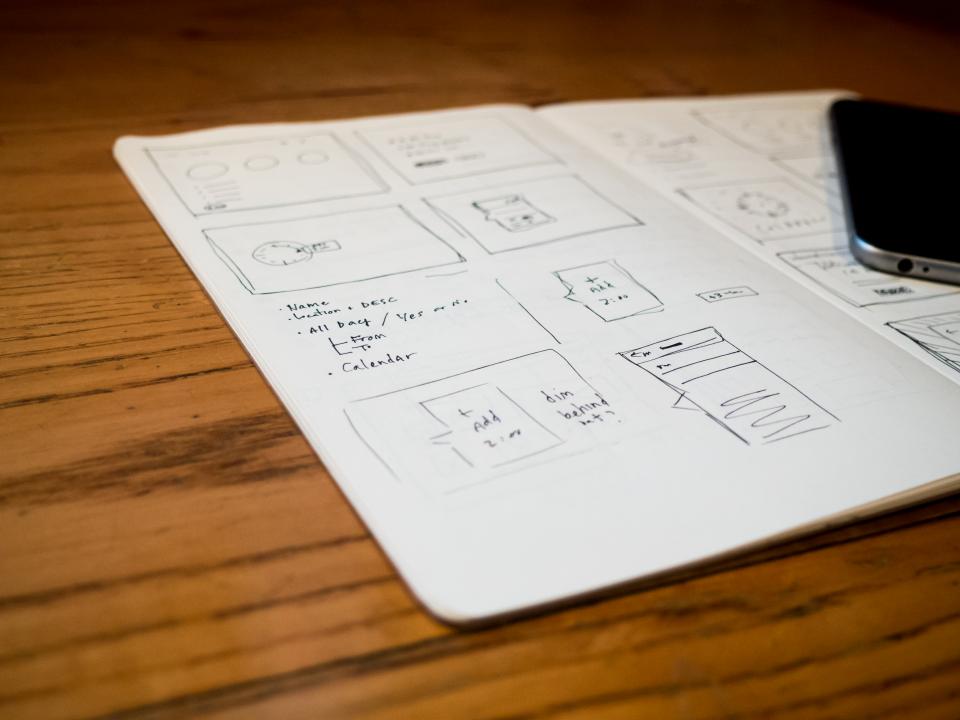
Before choosing colours and fonts, we sketch the layout of key pages as wireframes. These show where content, calls to action and navigation sit, without the distraction of visual design. It is much cheaper to change a wireframe than a finished design. Once the structure is agreed, we apply your brand to produce the visual design, usually starting with the homepage and one or two key templates. If your brand needs work first, we can help through our branding and creative direction service.
Step 5: Build
With the design approved, we build the site on a staging copy so you can review it without affecting your live website. The build covers templates, responsive layouts for phone and tablet, forms, integrations such as bookings or ecommerce, and performance work to keep pages loading quickly. Details of how we build are on our website design and development page.
Step 6: Content, testing and review
Content goes in, and we test thoroughly: browsers and devices, forms and emails, links, speed and accessibility. You review the site on the staging copy and send consolidated feedback, which keeps changes organised. We fix issues and confirm everything works as agreed.
Step 7: Launch
Launch is planned, not improvised. We set up redirects from old addresses to new pages so existing links and search rankings carry over, confirm tracking is working, check search settings, and switch the site over at a sensible time. We keep a close eye on the site immediately afterwards to catch anything unexpected.
Step 8: After launch
The work does not end at launch. Sites need updates, security monitoring, backups and ongoing improvement. We offer ongoing website maintenance and managed website plans so the site stays healthy and keeps improving as your business changes.
How long does a redesign take?
It depends on size and complexity, and above all on how quickly decisions and content arrive. A focused small business website often takes a matter of weeks, while larger sites with ecommerce, bookings or integrations take longer. A clear plan at the start is the best protection against delay.
What we need from you
- A clear point of contact who can make decisions.
- Access to your current site, domain, hosting and analytics.
- Content, photos and approvals within agreed timeframes.
- Consolidated feedback at each review stage.
Frequently asked questions
Will I lose my Google rankings if I redesign?
Not if the redesign is planned properly. Keeping valuable content, redirecting old addresses and checking technical settings protect existing rankings. Problems usually arise when these steps are skipped.
Can we redesign in stages?
Yes. For some businesses, starting with the most important pages and extending later makes sense, especially when budget or time is tight.
Who owns the finished website?
You should. Make sure your agreement is clear about ownership of the site, content, domain and hosting accounts before you start.
Web Paste is a Waikato web development agency based in Raglan. If you are planning a redesign, get in touch or see recent work in our portfolio.